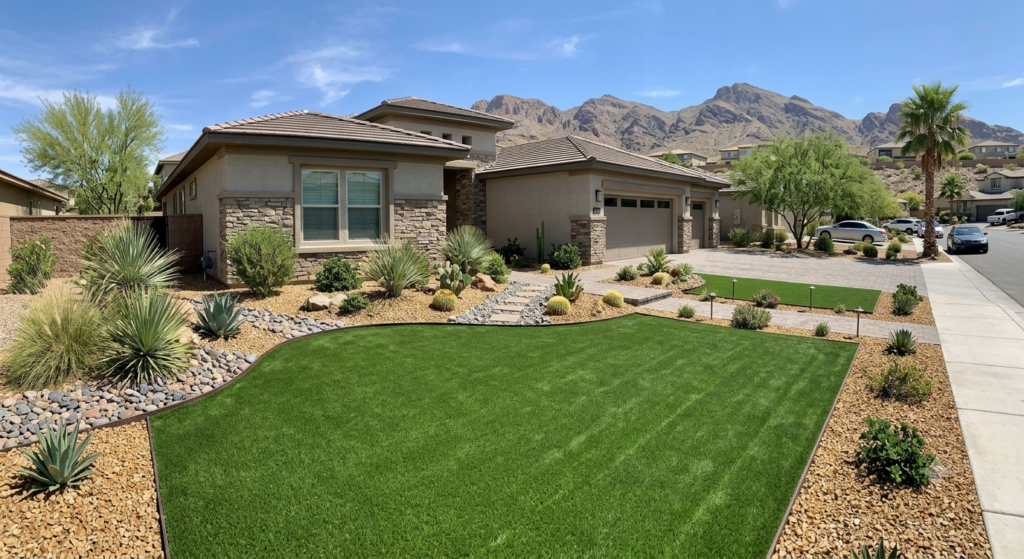
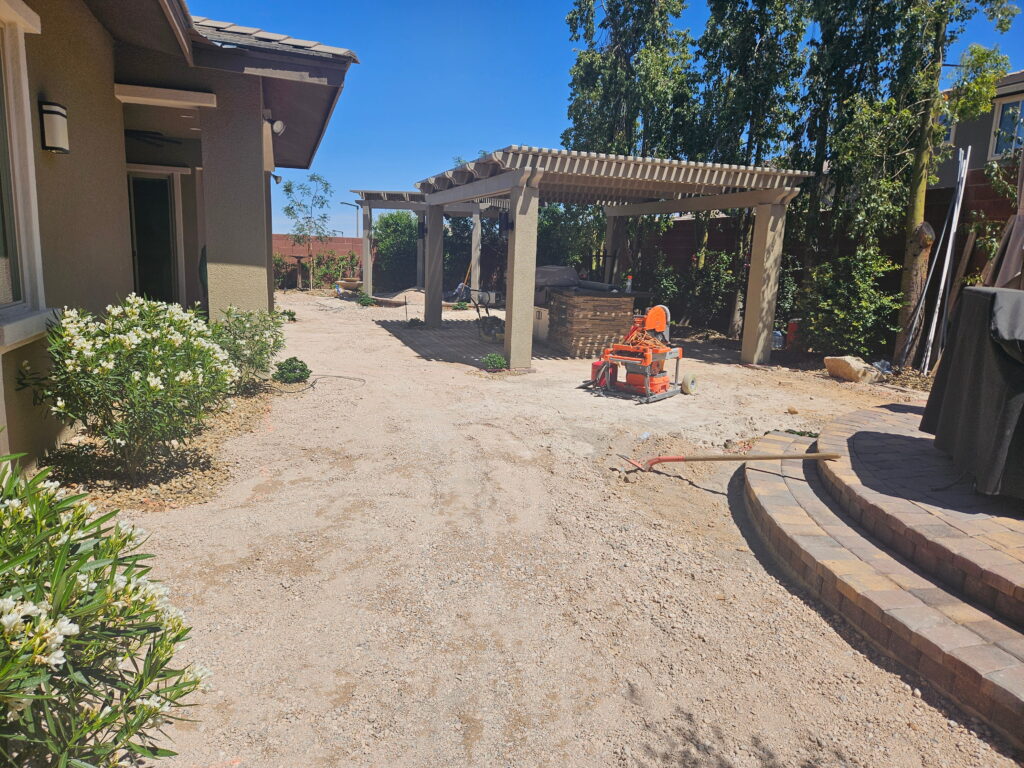
A desert yard does not have to be bare rock. The right plants give you color, shade, and texture while using a fraction of the water a lawn needs. The trick is choosing plants that are built for our heat, our alkaline soil, and our watering limits. Here are the ones that consistently do well in Summerlin, Henderson, and the rest of the valley, along with a few tips for putting them together.
Color that holds up to the heat
These flowering plants bring life to a desert yard without asking for much water.
- Desert marigold. Low and tidy with bright yellow flowers most of the year. It reseeds itself and asks for almost nothing.
- Autumn sage. A compact shrub that blooms in red, pink, or white and draws hummingbirds. It takes the heat and keeps flowering.
- Lantana. A reliable spreader with clusters of warm-colored flowers through the hot months. Good for filling space and softening edges.
- Texas ranger, also called Texas sage. A larger shrub with silvery foliage and purple blooms that appear after humidity or rain. Great for screening and structure.
Architectural plants and cactus
For shape and a strong desert look, these do the heavy lifting.
- Agave. Bold rosettes that make a statement in a bed or as a single focal point. Almost no water once established.
- Golden barrel cactus. The round, golden-spined classic you see all over high-end Vegas yards. Slow, sculptural, and tough.
- Red yucca. Not a true yucca, but a grassy clump that sends up tall coral flower spikes for months. Hummingbirds love it.
- Creosote bush. The native that defines our desert. It handles total neglect and smells like rain after a storm.
Trees for shade
Shade is the most valuable thing you can add to a desert yard, and it keeps the rest of your landscape cooler. These trees use little water for the canopy they give back.
- Palo verde. Green bark, fine leaves, and a burst of yellow flowers in spring. A fast, water-wise shade tree.
- Mesquite. Broad and sturdy with filtered shade. A workhorse for desert yards.
- Desert willow. Slender and graceful with trumpet-shaped flowers through the warm season. Good for smaller spaces.
If you plant qualifying trees as part of a grass conversion, the regional rebate program currently pays a bonus for each one, so shade can also offset some of your project cost.
Putting it together
A good desert design is more than a plant list. A few principles make the difference between a yard that thrives and one that struggles:
- Group plants by water need. Keep the thirstier plants on one drip line and the toughest ones on another, so nothing is over or under watered.
- Use rock or mulch as groundcover. It cuts evaporation by roughly half, holds down weeds, and ties the whole design together.
- Water with drip, not spray. Drip puts water at the roots where it counts and matches our watering rules far better than sprinklers.
- Leave room to grow. Plants look small at the nursery. Space them for their mature size so the yard fills in instead of crowding.
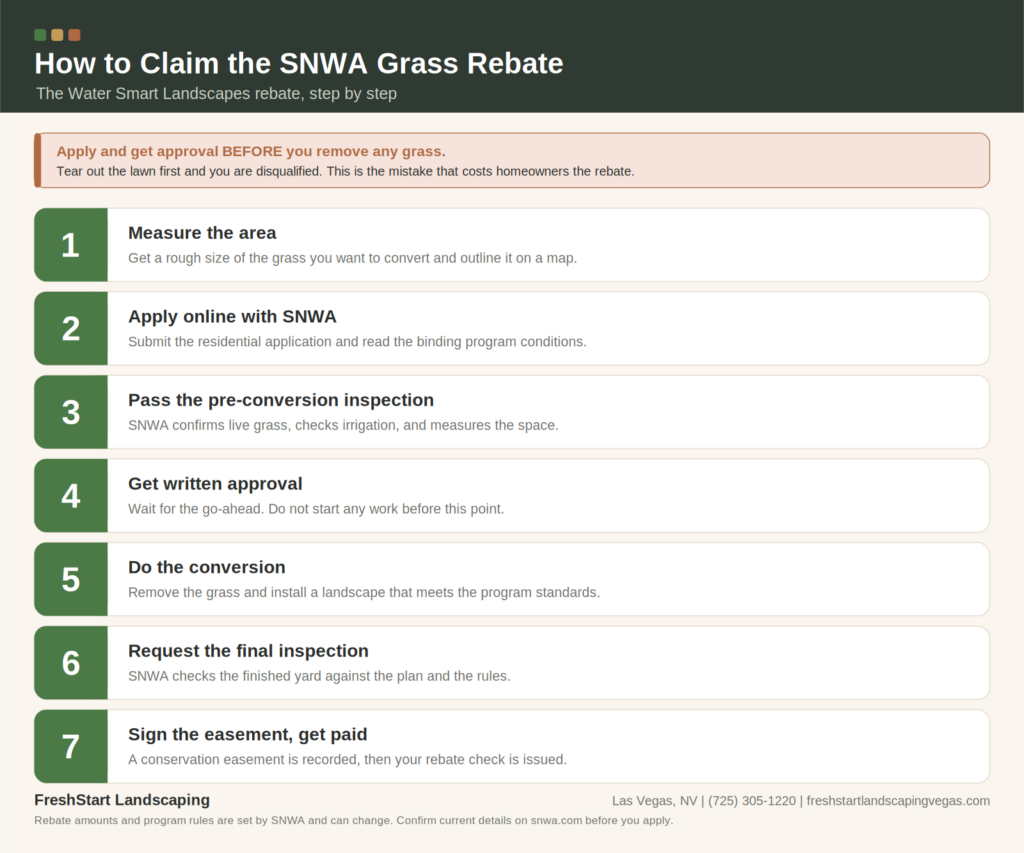
A quick note on plant selection and the rebate. If you are converting a lawn through the Water Smart Landscapes program, your new plants need to come from the approved plant list and meet a living-coverage standard. The plants above are common desert choices, but it is worth confirming your final list against the current program requirements.
Let us design it for you
Choosing plants is the fun part, but the layout, the drip zones, and the soil prep are what make a desert yard last. We design and install low-water landscapes across Summerlin, Henderson, and the wider valley, built for the climate and the watering rules.
See our desert landscaping page for examples, or contact us for a free consultation. Call (725) 305-1220 to talk through your yard.