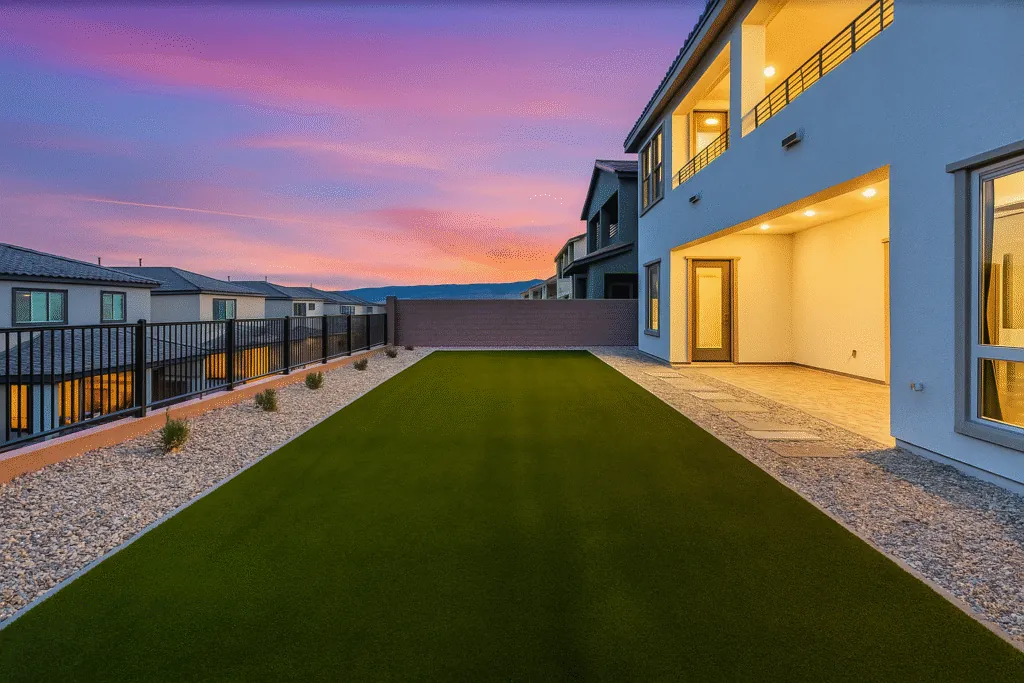
What It Costs to Replace Grass With Artificial Turf in Las Vegas
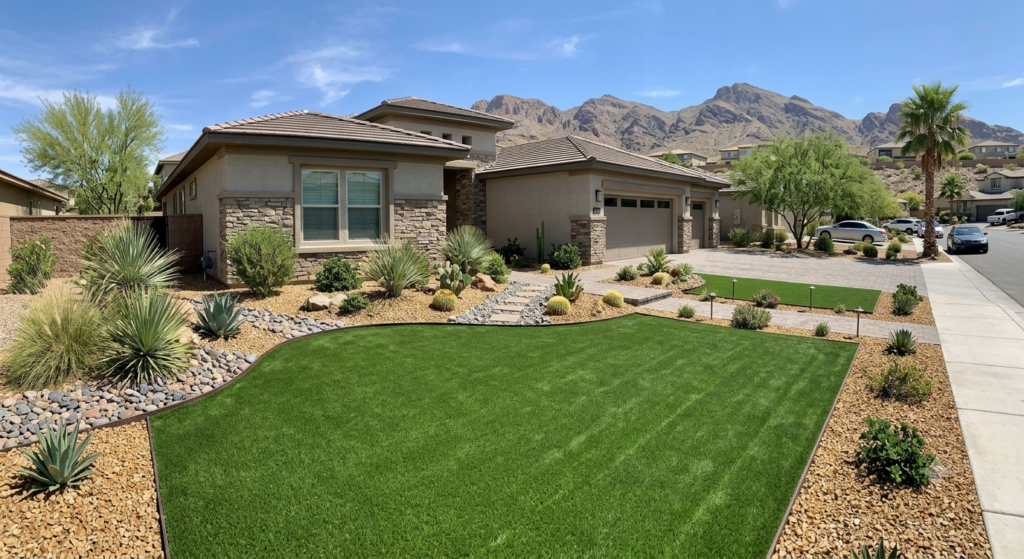
Artificial turf is one of the most common upgrades we do in the valley, and the first question is almost always the same: what will it cost? The honest answer is that it depends on your yard, but you can get a realistic range before anyone ever visits. Here is how the pricing works in 2026 and what actually moves the number up or down. The typical price range For most residential projects in Las Vegas, installed artificial turf runs somewhere in the range of 9 to 15 dollars per square foot. Simple, large, rectangular areas tend to land at the lower end. Small, oddly shaped, or premium installations land higher. Across the market you will see quotes as low as 6 dollars and as high as 25 dollars per square foot, which tells you how much the details matter. To put that in plain terms, a 500 square foot area at 11 dollars per square foot comes to about 5,500 dollars before any rebate. What drives the cost A few things explain most of the difference between a low quote and a high one: Turf quality. The grass itself ranges from thin economy products to dense, heat-resistant turf with better blade shapes and UV protection. Better turf costs more and lasts longer, often 15 years or more. Base preparation. A proper install means excavating a few inches and laying a compacted base for drainage. In Las Vegas this is where caliche, the hard rock layer under our soil, can add labor if crews have to break through it. Size and shape. Bigger areas usually cost less per square foot. Curves, tight corners, and fitting turf around pavers or planters add labor. The material brushed into the turf affects feel and surface temperature. Cooling and pet-specific infills cost more than standard sand. Old lawn removal. Tearing out and hauling away existing grass is part of the job and figures into the total. The water rebate changes the math This is the part homeowners often miss. The Southern Nevada Water Authority pays a rebate to replace living grass with water-smart landscaping, and that rebate can cover a large share of a turf or desert conversion. As of 2026, the SNWA rebate is 5 dollars per square foot for the first 10,000 square feet for single-family homes. Customers of the Las Vegas Valley Water District can receive an extra 2 dollars per square foot in qualifying areas, and the City of Henderson adds a flat supplement for its residents. There is one rule you cannot skip. You have to apply and pass a pre-conversion inspection before you remove any grass. Tear it out first and you lose the rebate. Permeable turf can qualify, but the conversion has to meet the program standards, so it is worth planning the project around the rebate from the start. The long-term savings The upfront cost is only half the story. A square foot of grass uses far more water than desert landscaping, and turf removes the watering bill for that area almost entirely. Over a year that is a meaningful cut to your bill, on top of no more mowing, fertilizing, or reseeding. Add the time you get back, and many homeowners see the project pay for itself within a few years, especially once the rebate is applied. There is also the maintenance side. Turf is low effort, not no effort. It needs the occasional rinse and debris cleanup to stay looking right, which is straightforward and something we also handle through our turf cleaning service. Getting an accurate number for your yard Because base prep and shape vary so much from yard to yard, a real quote means measuring the space and looking at the ground. We can do that and show you what the rebate would knock off the total. See our turf installation page for how the process works, or request a free quote and we will give you a clear, itemized estimate. Call (725) 305-1220 to get started. Rebate amounts are set by local water agencies and have changed more than once in the past year. Confirm the current rate before planning your project.
Travertine vs Pavers vs Concrete: Choosing the Right Patio Surface in Las Vegas
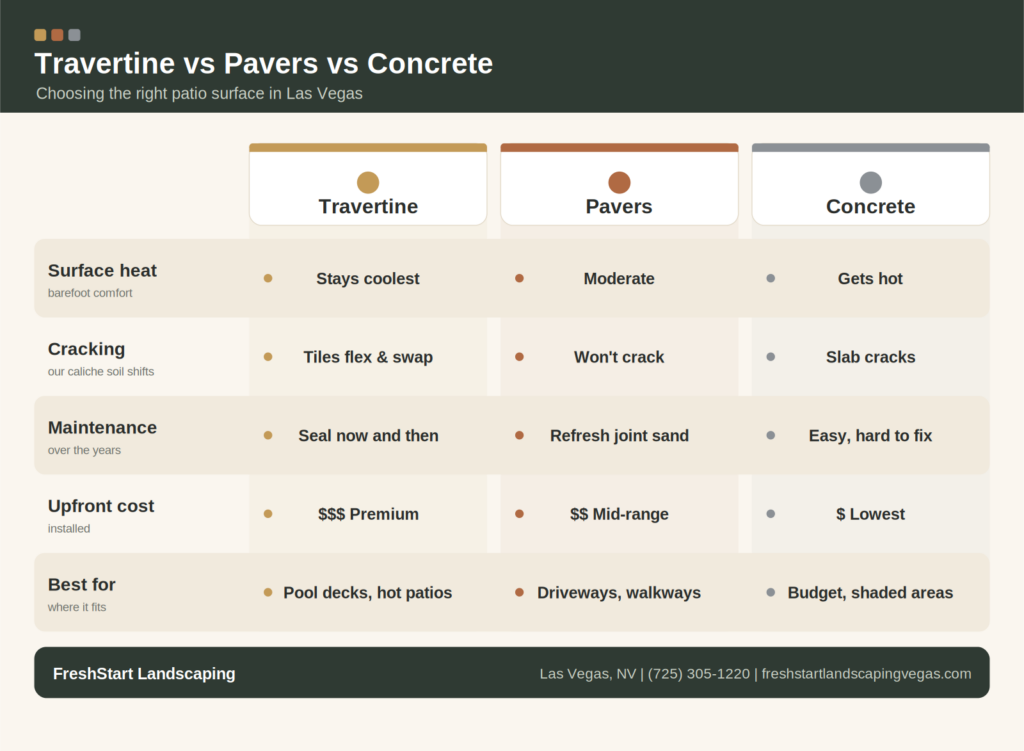
When homeowners plan a patio, walkway, or pool deck in Las Vegas, the choice usually comes down to three materials: travertine, pavers, or poured concrete. They all work here, but they do not perform the same way under our sun, and the differences matter once you are standing on the surface in July. Here is an honest look at each. Surface heat is the first thing to consider In a climate where summer afternoons sit above 105 degrees, how hot a surface gets is not a small detail, especially around a pool where people walk barefoot. Travertine is a natural stone that stays noticeably cooler than concrete. It does not absorb and hold heat the same way, which is why it is so popular for pool decks and patios used in the afternoon. Pavers fall in the middle and depend on the color and material you pick. Lighter pavers stay cooler than dark ones. Standard gray concrete absorbs a lot of heat and can get uncomfortable to stand on midday. If barefoot comfort is a priority, travertine has the clear edge, with light-colored pavers as a strong second. Durability and how each handles our ground Las Vegas soil moves. We sit on caliche, a hard cement-like layer, and the ground expands and shifts with temperature. That movement is what cracks patios over time. Poured concrete is a single slab, so when the ground shifts, it tends to crack, and a crack in concrete is permanent unless you cut and repair it. Pavers are individual units set over a compacted base, so they flex with ground movement instead of cracking, and if one ever gets damaged you can lift and replace that single piece. Travertine, when installed over a proper base, holds up well to heat and sun and lasts for decades, and like pavers, individual tiles can be swapped if needed. For a surface that ages well with our soil, the segmented options, pavers and travertine, have a real advantage over a single concrete pour. Maintenance over the years Concrete is low effort up front but hard to fix attractively. Once it cracks or stains, patching rarely blends in, and many homeowners end up resurfacing or replacing. Pavers need occasional attention to the joints, the sand between units, and a wash now and then. Sealing is optional and extends the look. Travertine benefits from periodic sealing to guard against staining, but it is otherwise easy to live with. Both pavers and travertine let you address a small problem area without redoing the whole surface, which concrete does not. Cost and long-term value Concrete is usually the lowest cost to install, which is why it is the default for builders. Pavers cost more up front, and travertine is typically the premium of the three. The gap narrows when you look past installation day. Concrete that cracks and gets replaced can cost more over ten years than a paver or travertine surface that simply gets a repair here and there. There is also resale to think about. A travertine or paver patio reads as an upgrade to buyers in the Las Vegas market, while plain concrete reads as standard. If you plan to sell down the line, the better surface tends to hold its value. A simple way to decide Choose travertine if you want the coolest surface underfoot, a high-end look, and a pool deck or patio you will use in the heat. Choose pavers if you want strong durability, design flexibility with colors and patterns, and easy spot repairs at a more moderate cost. Choose concrete if budget is the main driver and the area is low-traffic or out of direct afternoon sun. Most of the backyards we build use a mix, for example travertine around the pool and pavers for the walkways and driveway, so each area gets the right material for how it is used. If you are weighing these options for your own yard, we install both travertine and pavers and can walk you through what fits your space and budget as part of our hardscaping work. Call (725) 305-1220 to set up a free consultation.
Las Vegas Water Restrictions in 2026: What Every Homeowner Needs to Know
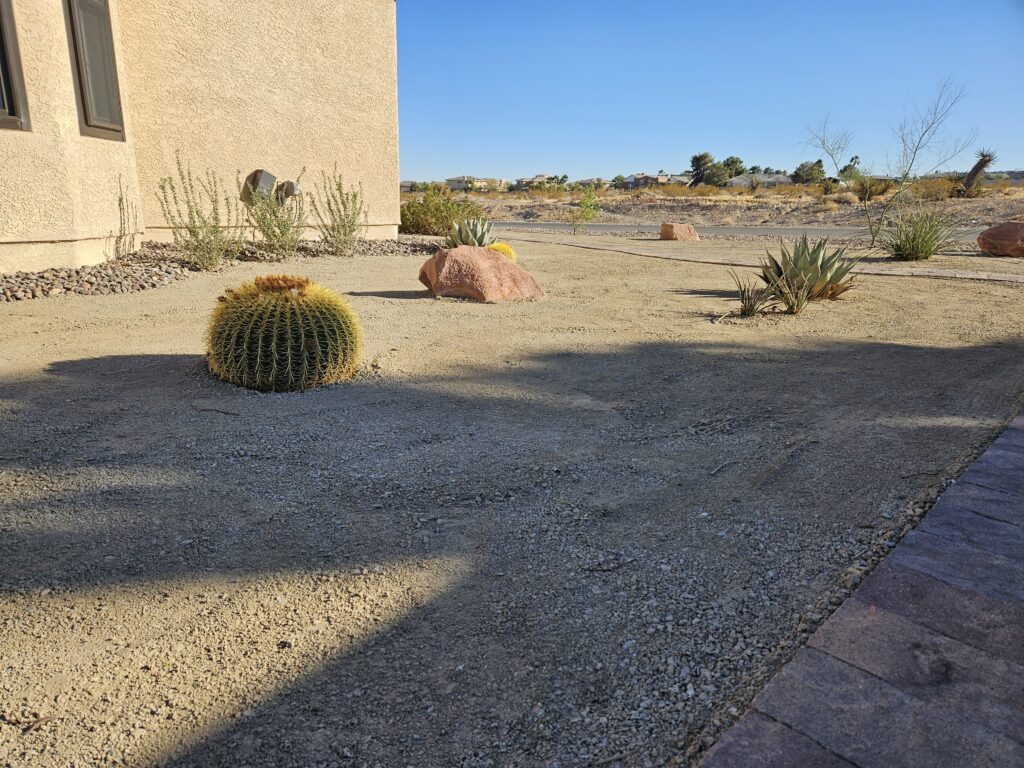
If you water a lawn in the Las Vegas Valley, the days and hours you are allowed to run your sprinklers are set by law, not by preference. The rules tighten in summer and loosen in winter, and the fines for getting it wrong show up right on your water bill. Here is how the current schedule works and what is coming next. The mandatory watering schedule changes four times a year The Las Vegas Valley Water District and the Southern Nevada Water Authority run a seasonal schedule that every customer has to follow. The number of days you can use sprinklers depends on the time of year: Spring, March 1 through April 30: three assigned days a week. Summer, May 1 through August 31: up to six days a week, but no sprinkler watering between 11 a.m. and 7 p.m. Fall, September 1 through October 31: three assigned days a week. Winter, November 1 through February 28: one assigned day a week. One rule holds steady all year. Sprinkler watering is never allowed on Sundays, in any season, for any address. The summer time window catches a lot of people. From May through August you can water on six of your days, but if a sprinkler runs during the middle of the day, that is a violation even on an allowed day. Find your watering group first Your assigned days come from your watering group, which is a letter from A through F based on where your property sits. You can look it up on the LVVWD website or check your monthly water bill, where the group is printed. Set your irrigation controller to those days only, and turn off every other day. A clock left on the wrong setting is the most common reason homeowners get a water-waste charge. How long to run each zone For grass on pop-up sprinklers, the local guidance is the twelve minute method: three short cycles of about four minutes each, with roughly an hour between cycles. Our soil is hard and often sits on caliche, so short cycles let the water soak in instead of running off into the street. Drip systems for trees and plants work differently. They run longer and far less often, usually a single cycle of 30 to 90 minutes on the assigned day. Water-waste fines add up Running sprinklers outside your assigned days or hours, or letting water run off onto the sidewalk or street, counts as water waste. First offenses generally start around 80 dollars and climb with each repeat violation inside a twelve month period. A broken sprinkler head that floods a walkway is citable on its own, so it pays to walk the yard now and then and replace anything cracked. The grass ban is the bigger change ahead Nevada Assembly Bill 356 prohibits the use of Colorado River water to irrigate nonfunctional turf in the Las Vegas Valley starting January 1, 2027. Nonfunctional turf means decorative grass that nobody actually uses, the kind found along streets in HOA communities, around business complexes, and in medians and traffic circles. This is the part that confuses people, so here is the plain version. The 2027 ban targets nonfunctional grass at commercial, HOA, and multifamily properties. A single-family homeowner is not being forced to tear out a backyard lawn the kids play on. That said, many homeowners are choosing to convert anyway, because the rebate for doing it is currently high and the long-term watering rules are only getting stricter. What to do now If you are tired of fighting the schedule, or you have grass that never gets used, this is a good time to plan a change. Replacing thirsty turf with desert landscaping cuts your water use sharply and takes the watering-day stress off your plate. The region also pays a rebate for the conversion, which can cover a large share of the cost. We handle the full process, from grass removal to a finished desert landscape built for our climate. If you want to know what your yard would look like and what the rebate would cover, reach out for a free consultation or call us at (725) 305-1220. Watering rules and rebate amounts are updated by local water agencies and can change. Confirm the current schedule for your address on the LVVWD website before setting your controller.
Replacing Your Grass In Las Vegas, NV With Artificial Turf: How to Choose The Many Options?
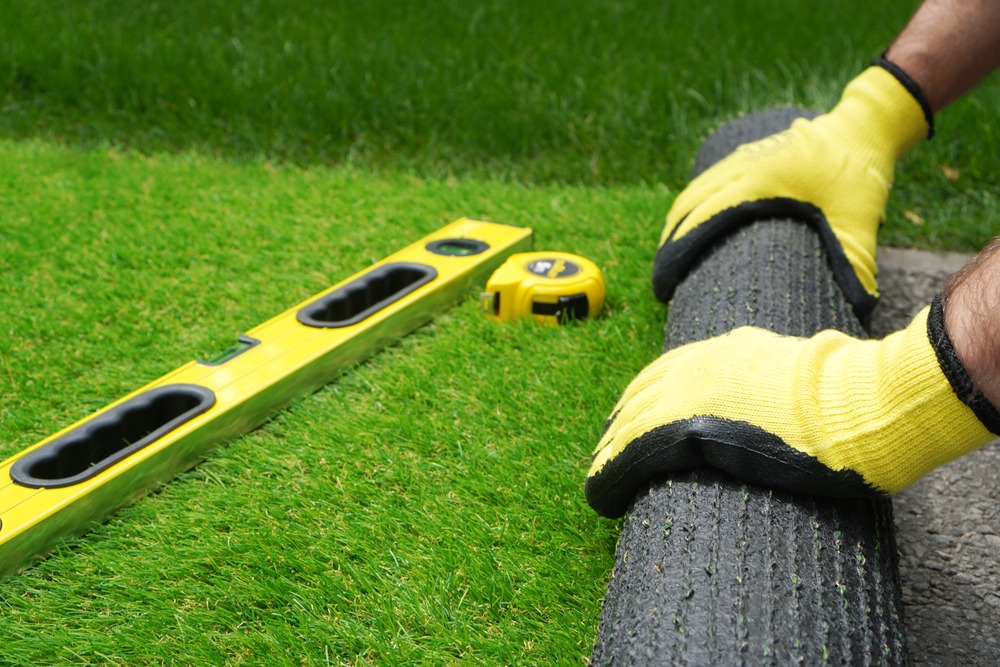
Las Vegas’ dry desert climate makes maintaining a lush, green lawn a daunting challenge for homeowners. High water bills, scorching temperatures, and constant upkeep can quickly become burdensome. One popular solution is replacing natural grass with artificial turf. If you’re considering making the switch, this guide will walk you through everything you need to know about choosing artificial grass and creating the perfect artificial grass landscape for your home. Benefits of Artificial Turf in Las Vegas Artificial grass has gained widespread popularity in Las Vegas for many good reasons. Here are the key benefits of installing artificial turf in your yard: 1. Water Conservation In a region known for water scarcity, artificial grass significantly reduces water usage. Unlike natural grass, artificial turf requires no irrigation, helping you save thousands of gallons of water annually. 2. Low Maintenance Perfect artificial grass requires minimal upkeep. There’s no need for mowing, fertilizing, or dealing with weeds. Occasional rinsing and brushing are all it takes to keep your lawn looking pristine. 3. Durability in Extreme Weather Las Vegas experiences harsh sun, heat, and occasional dust storms. High-quality artificial turf is designed to withstand extreme temperatures without fading or deteriorating, ensuring a long-lasting, vibrant appearance. 4. Aesthetic Appeal Year-Round Artificial grass stays green and lush throughout the year, regardless of the weather conditions. It creates a beautiful, manicured look that enhances curb appeal.